Reviews written in 2023, in reverse chronological order.
 SUPERBUG
 |
Butcher's Crossing (film) |
I read a few reviews of this prior to watching, all of which were negative. Even so, I wasn't dissuaded—I felt that the source material was strong enough that an adaptation of it couldn't fail. I was wrong. So wrong, in fact, that I barely made it through half of this movie before I put it on 1.5x speed and tuned it out.
From the first few minutes, it was apparent that my perception of Andrews had little in common with the chipper city boy marveling at the country sights on the screen. I'm not sure how to explain it, but my impression of him from the book was just nowhere near as fresh faced. Of course, I'm no literature expert, but it's hard for me to imagine I misunderstood his behavior to such an extent. Aside from some characterization that seemed off to me, I was let down by the presentation of one of my personal favorite themes: divinity and land. The theme of the untamed west being God incarnate is one that I hold in high esteem, and it was handled beautifully and subtly in the novel. In the movie, however, watching Andrews spin around in the forest hollering "This is God! This is what I wanted to see!" was almost insulting. Why does everything need be shouted? Can't a concept be conveyed in a whisper? Have the people who make movies never heard the phrase "show don't tell"? A few other scenes were introduced in the film that weren't present in the book. The corpse in the shed, the travelling family, the poisoning, the different character deaths... I can't understand the need for any of these changes. They didn't serve to further any points or develop the world or characters. I have a few other miscellaneous complaints. The sound design was lacking, to say the least. I wasn't paying attention for several big plot moments and the score was so unremarkable I didn't even notice. Scene cuts were jarring, the set and costumes felt extremely modern, and this is just a really personal peeve but there's no reason for those characters to have such bright white teeth. The movie concludes by proclaiming that it was filmed on land stewarded by the Blackfeet Nation, and that the buffalo used in the movie were handled by the nation's buffalo program. Perhaps this acknowledgement would have felt meaningful if the movie versions of the characters hadn't expressed unnecessary hatred towards Native Americans, which absolutely was not part of the book. What a disappointing and shallow end to a disappointing and shallow movie! To be clear, I do think films can be a wonderful medium for philosophical tales. It's just a shame that while Butcher's Crossing had a strong source material, it failed to communicate any of the haunting themes of the original novel. Review written December 2023. |
| Dir. Gabe Polsky | ||
| 2022 | ||
| ☆☆☆☆☆ |
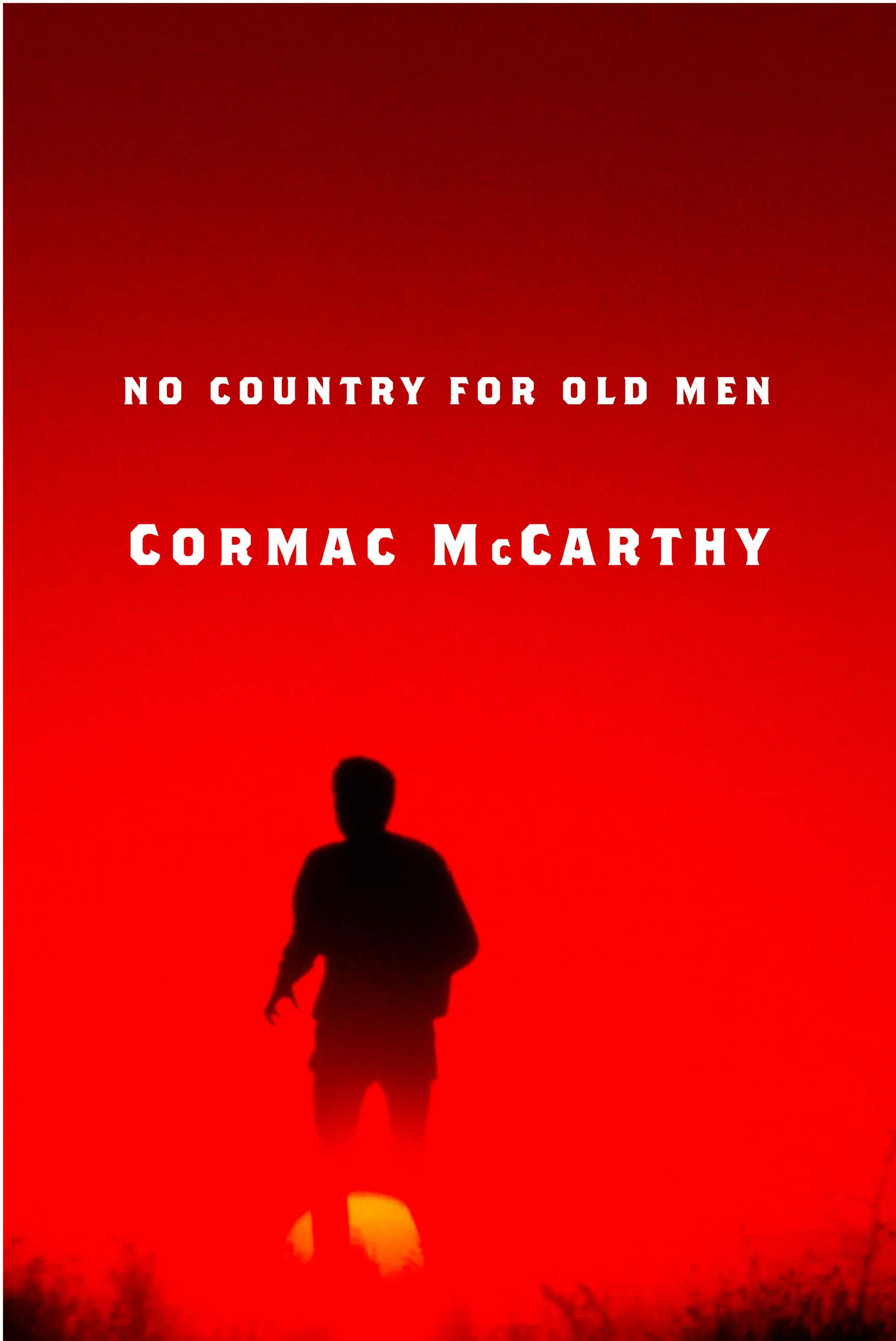 |
No Country For Old Men |
Is this one of those movies everyone has seen? I think it is. I'll explain briefly anyways; Llewelyn Moss, professional welder, finds a couple million dollars in the desert, the remnants of a failed drug deal. He takes the money and runs. Two key men, Anton Chigurh and Sheriff Bell, pursue him. Chigurh, an inscrutable killer, seeks the money, while Bell wants to see Moss and his wife reunited.
While that covers the basic plot of both the book and the film adaptation, it's not a very good summary. The novel covers so much ground, more so philosophically than physically, that simply describing characters and events can't really convey much about it. Or that could be a failure on my part, as I think this is maybe one of those stories I just don't quite get. I mean, I get it to some extent; I watched the movie a while ago (actually, I had made the best broccoli casserole I've ever pulled off and I ate that while I watched the movie), and now I've read the book, so it's not like I missed any of the very obvious themes. Maybe I'm just not sure what to make of it. I like the violence and the tragedy and the sorrow of it all. I like the contrast between everyman Moss and Chigurh, who is like a force of nature. I like how it's written, with minimal punctuation and the blunt lines of action. I can name things I like about it, but I don't think I could tell you whether or not I like the book as a whole. It's certainly worth reading. I'm very glad I read it. It just makes me so sad, and not in a particularly satisfying way either. Well. Up until now, I've been trying to write my "reviews" without being influenced by other points of view. It may sound stupid and isolationist, but I really want to work through my own thoughts and form my own opinions, whether they may be in line with those of others or not. So, since I don't have much to say I'm going to go watch the film again, maybe skim the book, read some reviews of both, and I'll come back and share any revelations I may have.
I lied. I don't think I'll be watching the movie again anytime soon, as it's a surprisingly taxing endeavor. I did read a few reviews, though. Most notably, several mentioned greed as a theme, which made me feel like a fucking idiot because that somehow never occurred to me. I guess I didn't see Moss's actions as "greedy" so much as "natural." I'm not going to think too hard about what that says about me. In my defense, though, if YOU found 2 million in cash in the middle of nowhere...? I believe even the most upstanding members of society would succumb to temptation. Well, my moral shortcomings aside, I don't really know what to say. This review feels like a failure, because I don't have much to say and I'm going in circles and I still can't quite tell you whether or not I enjoyed it. I mean, isn't it strange how a story can leave you thinking about it for months, and the whole time you're not even sure whether you liked it or not? Maybe "liking" or even "enjoying" something isn't always what matters. I don't know. I told someone I liked it. Let's just go with that: I liked it. The end. Review written August 2023, edited September 2023. |
| Cormac McCarthy | ||
| 2005 | ||
| ★★★☆☆ | Favorite Quotes
Yeah. Well. Everbody is somethin. People complain about the bad things that happen to em that they dont deserve but they seldom mention the good. About what they done to deserve them things. I dont recall that I ever give the good Lord all that much cause to smile on me. But he did. [...] they asked me if I believed in Satan. I said Well that aint the point. And they said I know but do you? I had to think about that. I guess as a boy I did. Come the middle years my belief I reckon had waned somewhat. Now I’m startin to lean back the other way. He explains a lot of things that otherwise dont have no explanation. Or not to me they dont. You think when you wake up in the mornin yesterday dont count. But yesterday is all that does count. What else is there? Your life is made out of the days it’s made out of. Nothin else. You might think you could run away and change your name and I dont know what all. Start over. And then one mornin you wake up and look at the ceilin and guess who’s layin there? Well you’re somethin. Aint you? |

 |
The Revenant |
If there's one thing you should know about me, it's that I LOVE a good revenge story. Oh, I know he who seeks vengeance should dig two graves and all, but give me an eye for an eye over forgiveness any day, and The Revenant delivered.
I believe I watched the movie around the time it came out, in 2015. I wasn't exactly allowed to watch R rated movies when I was so young, but I think my mom liked it, so when she rewatched it she let me come along for the ride. In any case, I had no memory of the film. I learned recently that it was adapted from a book, and decided I wanted to read it and watch the movie again. My mom has been desperate for things to read lately, so I asked her to read it as well, and we watched the movie together after finishing the novel. The book is fucking BRILLIANT—grueling, captivating, thrilling. Based on the true story of Hugh Glass, a trapper in the 1820s, it recounts the harrowing bear attack that leaves him incapacitated. He's been traveling the frigid Dakota region with a group of other trappers, and they elect to leave him behind, believing he will succumb to his injuries. After being offered monetary incentive, two men, Fitzgerald and Jim Bridger, agree to remain with him to give him a proper burial. Naturally, they abandon him when a party of hostile Native Americans travels too close to their camp. As if simply abandoning Glass wasn't enough, Fitzgerald and Bridger rob him of his belongings, including his fine Anstadt rifle. The expertly crafted weapon is elegant and deadly, "the one extravagance of his life." Unforgivable. Alone and suffering from his wounds, he survives, against all odds, and pursues those who wronged him across hundreds of miles of wilderness. Punke tells the story in a clear, matter-of-fact way. I haven't read many stories of a biographical nature, but something about this assertive account of events really held my attention. I genuinely couldn't put it down. I don't have any criticism or complaints about ANYTHING in the book, which is rare coming from me. As for the movie, I'm sure it was well-produced, given all the awards it won, but it deviated from the book far too much for my tastes. I kind of quit paying attention like halfway through and only tuned in to comment on how stupid it was. All the changes were so pointless! The book was incredible, I can't even begin to imagine why they felt the need to change it so much. I guess moviegoers need everything sensationalized so they don't have to do any extrapolation on their part. The most egregious alteration is that they decided Glass needed a son. It's extremely obvious from the first few minutes of the film that this son is killed by Fitzgerald. Glass feels the need to avenge his loss, which COMPLETELY changes the themes of revenge in the novel. Hunting down Fitzgerald would not bring his son back. The movie makes that clear. In the book, though, Glass absolutely can reclaim what was taken from him: his rifle. This change is truly a devastating loss for us revenge enjoyers. Another issue I had is that they cut the encounters and experiences he had during his trek, replacing them with a strange B-plot that tries to paint the Native American attacks as a response to white trappers kidnapping a chief's daughter... I think? Whatever their intentions were, it has nothing to do with Glass and his story. In the novel, the meetings he has further his journey and develop the readers' perception of the world he lives in. They demonstrate his intelligence and resourcefulness, traits which enabled him to recover from his injuries and survive in the harsh climate. Most of his experiences are also just fucking BADASS. One scene I was devastated about not seeing in the film is when he fights wolves off a buffalo carcass with burning branches. While a thunderstorm rages around him. I don't care how much Punke fabricated this scene, it's EPIC. It makes far more sense in Glass's tale than whatever was going on in the movie. It almost feels like a slap in the face to the author, who put so much effort into research for the novel. Personally, I would be—at the very least—somewhat irritated by the drastic changes the filmmakers made to the story, even if they did pull off one gnarly bear attack, and they filmed a lot of it under brutal weather conditions in Canada, and Leonardo DiCaprio was dedicated enough to eat raw bison liver. (Unfortunately, Punke has not been free to comment on the film due to his position as a World Trade Organization ambassador.) Not to mention the insult to the real Hugh Glass, dead for nearly 200 years now, who did not have any documented children and Well, I actually really loved the book. I've never been one for historical fiction or anything, but it's pretty fucking awesome and I will read it again. As for the film, I wish I hadn't even bothered with it. Review written August 2023. |
| Michael Punke | ||
| 2002 | ||
| ★★★★★ | Favorite Quotes
And if Glass believed in a god, surely it resided in this great western expanse. Not a physical presence, but an idea, something beyond man’s ability to comprehend, something larger.* *I will always go a little crazy over comparison of the land to "god" in westerns. Gets me every. single. time. |
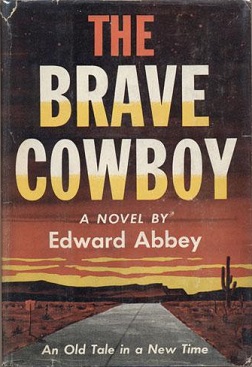 |
The Brave Cowboy |
It’s only a story. None of it really happened. How could it? How could such people be? The prisoner is probably a professor. The sheriff loses the next election. The truckdriver died of emphysema. And as for the cowboy, that character, why nobody even knows where he is anymore. Or even, to be honest, if he ever really was. In this "old tale in a new time," it's the 1950s, every man has long since swapped steed for steel, except for Jack Burns. The titular brave cowboy has ridden his ornery little horse Whisky across the paved, industrialized landscape of New Mexico to save his friend, Paul Bondi, academic and anarchist, who faces two years in prison for refusing to sign up for the draft. Burns is determined to break him out. In his endeavors, the police find that Burns has also dodged the draft. He becomes a wanted man, running from the law in the unforgiving mountain terrain. It's quite an intense chase, though it's just one man and his horse against a handful of cops. Abbey writes Burns with such a tangible sense of desperation, and combined with the beautiful descriptions of the surroundings it's a well-crafted story.
Instead of resisting the draft, Bondi's character in the film has provided aid to illegal immigrants. While this is certainly a noble cause, the story paints him as more of a bleeding heart than a man of conviction rebelling against an unjust society. In the novel, he gives Burns impassioned speeches about prioritizing friends over institutions, and the anti-government sentiment that motivates his decisions lends nuance to the overall story. Without this context, the story is no longer a critique of capitalist America; instead, it degrades into a widely palatable tale of a cowboy's individualism. Anyways, the movie lost a lot of the heart of the book. I would have enjoyed it far more if I hadn't read the book, but hey, reading and then watching something will almost always be the experience I prefer. That said, it's a quick read and a short watch, so I think whether you only read the book, only watch the film, or do both in either order, it's worth your time. Review written August 2023. |
| Edward Abbey | ||
| 1956 | ||
| ★★★☆☆ | Favorite Quotes
Like all brave cowboys dead and alive / on riding and wind and stars he could thrive I don’t see the world getting any better; like you I see it getting worse. I see liberty being strangled like a dog everywhere I look, I see my own country overwhelmed by ugliness and mediocrity and overcrowding, the land smothered under airstrips and superhighways, the natural wealth of a million years squandered on atomic bombs and tin automobiles and television sets and ball-point fountain pens. It’s a sorry sight indeed; I can’t blame you for wanting no part of it. But I’m not yet ready to withdraw, despite the horror of it. Even if withdrawal is possible, which I doubt. Obedience is such a fundamental habit of the contemporary American mind that any kind of disobedience is regarded as a form of insanity. A man bent on chivalry can be quite ruthless. |
 The Brave Cowboy was adapted into the 1962 film Lonely Are the Brave, dir. David Miller. For the most part, I thought the movie was a halfway decent adaptation, as it draws a lot of scenes and quotes directly from the book. There's only one flaw, and unfortunately it's pretty fatal: it completely dropped the anarchist themes.
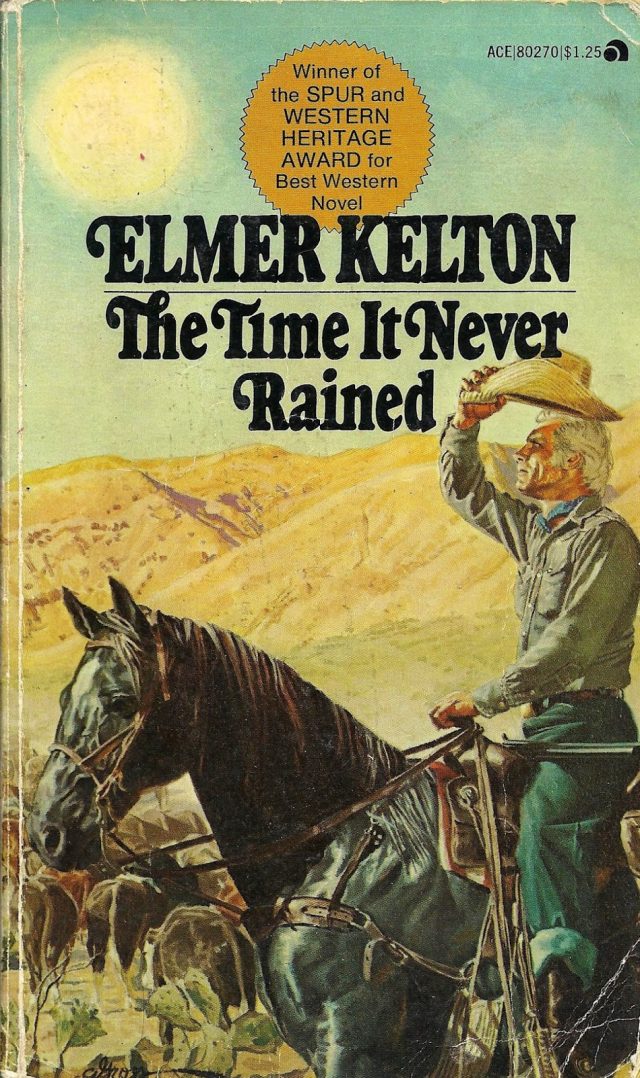 |
The Time It Never Rained |
Oh, let me tell you: I loved this one. The last book I read, Butcher's Crossing, harshly criticized the American individualism prevalent in Western tales. In stark contrast, The Time It Never Rained celebrates an aging rancher's self-sufficiency and stubbornness.
Along the road into town, a sign reads: WELCOME TO RIO SECO
One of said cranks goes by the name of Charlie Flagg, and he's the proud owner of a ranch in West Texas. As the title of the novel implies, Brushy Top Ranch falls upon hard times as the rains never come. Other places might have several drouths in a single summer. Texas was more likely to have several summers in a single drouth. Rio Seco has seen droughts that span two, three years, but this is shaping up to be one hell of a dry spell. Not only is it dangerously long, but the ranchers have turned to new federal farm programs for help in their time of need. It's the 1950s, and the government will subsidize hay for cattle and sheep, cover costs for drilling new wells, help pay for construction of barns and windmills. Charlie watches his friends and neighbors flock to this government money, and decides he would rather keep his pride than do the same. He's worked his land successfully for years without any outside help; why should he accept it now? The drouth drags on. Charlie's son, Tom, runs off to live on the rodeo circuit instead of taking on his share of the ranch. Members of the Flores family, who have lived and worked at Brushy Top for many years, suffer as Charlie can barely afford to pay them. Misfortunes and debt pile up as the rain never comes, but Charlie Flagg still refuses to draw government help, and his fellow ranchmen take his conviction as an insult to their own integrity. He stands alone. At least, he's alone as far as he can tell; he's unaware of the deep respect the reader inevitably develops for him, unaware of how they root for a proud old crank. His successes and his losses are the reader's. This is certainly due to how personal the novel was, as Charlie's character was inspired by Kelton's ranch-owning father and other men he knew growing up who experienced many drouths. The lived experience lends a vivid, cinematic quality to the writing that's captivating and beautiful. Anyways, I want to return to my earlier comparison. Butcher's Crossing, which I finished right before I dove into this book, follows a young man who dreams of the rugged Western lifestyle and connection with the land. In his travels, he becomes intimately acquainted with the hardships that result from self-sufficiency. He watches his companions slaughter buffalo by the thousands and wrestles with the animals' place in the world, as well as his own. It's so entirely different from premise of The Time It Never Rained, where the protagonist has deep roots in the West. Charlie has had a lifetime to come to respect and love the land he manages. He also watches animals die, but they aren't felled by bullets as buffalo are in Butcher's Crossing; the harshness of the drought, coyotes, and poison plants claim their lives. So, I think it's fascinating how two man vs nature stories can be so different yet revolve around such inextricable concepts. They complement each other perfectly. Reading them back-to-back has had my mind absolutely racing, and I already feel the need to write a full comparison review about the two. I HIGHLY recommend both books! Check them out and let me know what you think! Review written July 2023. |
| Elmer Kelton | ||
| 1973 | ||
| ★★★★☆ | Favorite Quotes
It was a comforting sight, this country. It was an ageless land where the past was still a living thing and old voices still whispered, where the freshness of the pioneer time had not yet all faded, where a few of the old dreams were not yet dark with tarnish. Time and memories—so many good things and so many bad—but strange how the bad things seemed to fade so that you remembered mostly the good. Maybe that was one of life’s main compensations, having those memories with the rough edges blunted down and the bright parts polished to a diamond gleam. Emil had loved this land the way he loved his God. In a sense, he had seen God and the land as one and the same. Did you ever know a man who didn’t have any bad habits? I have, and I always hated the son of a bitch. |
 |
Butcher's Crossing |
I've seen this book described as an "anti-western," and I think that's quite accurate. Set in the 1870s, the novel follows Will Andrews, who has just dropped out of Harvard and traversed half the country to end up in Butcher's Crossing. From there, he sets out with three other men to hunt buffalo in the mountains of Colorado, a journey into the untamed west on which he hopes to find himself (and fortune).
In his writing, Williams strays from the typical Western romanticism of unexplored wilderness and instead allows a sense of loss and despondency to permeate the entire novel. While I don't typically seek that in stories, I think I was able to appreciate the criticism (which at times I mistook for cynicism) of depictions of the "conquering" of the west. Though it is highly philosophical at points, it provides a realistic and grounded perspective on westward expansion, the over‐hunting of buffalo, and some sort of strange American indivualism, and I enjoyed it well enough. Anyways, while I was searching for a cover picture to use, I found that Butcher's Crossing has been adapted into a movie. I'm not even sure whether production is complete or not, but at this time it doesn't seem available anywhere. You can be certain that when I find it I'll be reviewing it here! Review written July 2023. |
| John Williams | ||
| 1960 | ||
| ★★★☆☆ | Favorite Quote
Sometimes after listening to the droning voices in the chapel and in the classrooms, he had fled the confines of Cambridge to the fields and woods that lay southwestward to it. There in some small solitude, standing on bare ground, he felt his head bathed by the clean air and uplifted into infinite space; the meanness and the constriction he had felt were dissipated in the wildness about him. |
| Omaha, Nebraska |
My university granted me a free trip to Omaha for a research conference. It seemed like a bland destination, even for professional purposes, but it wasn't so bad.
The city itself felt similar to the city I live in; the biggest difference is how flat Nebraska is. On the flight over, I was really surprised by how all the roads are perfectly straight, at right angles to each other. It seems painfully boring; I love the winding roads and rolling hills of my home state. Another interesting thing about the roads is how walkable the north end of the city is. I jaywalked CONSTANTLY, all hours of the day, during the week and on the weekend, and never came close to being hit by a car. I would have been hospitalized several times over (or dead) if I attempted that shit in my city. I also walked on the Pedestrian Bridge, which offered nice views but nothing spectacular. The weather was alright. The sun seemed very harsh due to the lack of moisture in the air. People always claim "it's the humidity that gets you" in the summer, but this trip got me thinking I might not be built for dry heat. I was there for four days, and that was long enough for me to become quite sick of the whole "conference" thing. Outside of business, though, I could have spent WEEKS perusing the oddities of the Old Market. I love shops that are packed to the brim with old junk, records, art, and candies. I especially enjoyed visiting the Artists' Cooperative Gallery; Virginia Ocken's vibrant and textured paintings left quite an impression on me. They're much more stunning in person, but you can see a couple of them below.
In terms of food, a lovely shop owner recommended Jams, and I had an awesome salad there. The worst place I ate was Zio's, the salad was just lettuce and the pizza was soggy. And coffee places! One of the best decisions I made on the whole trip was getting the Hawaiian Vacation smoothie at 13th Street Coffee. I should have gone back for an actual coffee instead of trying a different place, because The Table Coffee Co. was a bust, my iced mocha had a horrible waxy texture. My friend got a blueberry matcha that barely had any flavor. With more time to explore, I'm sure we could have found the best coffee shop in the city, but we would have been hard pressed to find a place worse than The Table. All in all, while the attractions of the thriving downtown weren't enough for me to consider Omaha a future home or vacation spot, it was a decent enough city for a short visit. Review written July 2023. |
|
| The Mormons | ||
| 1854 | ||
| ★★☆☆☆ | Favorite Place: Hollywood Candy |


 |
The Sixth Gun |
I'm learning that I LOVE the process of revising reviews as I make my way through the book/album/etc. I started typing my thoughts about this comic when I was about halfway through, and I was pleased that some of my opinions changed as the story wrapped up.
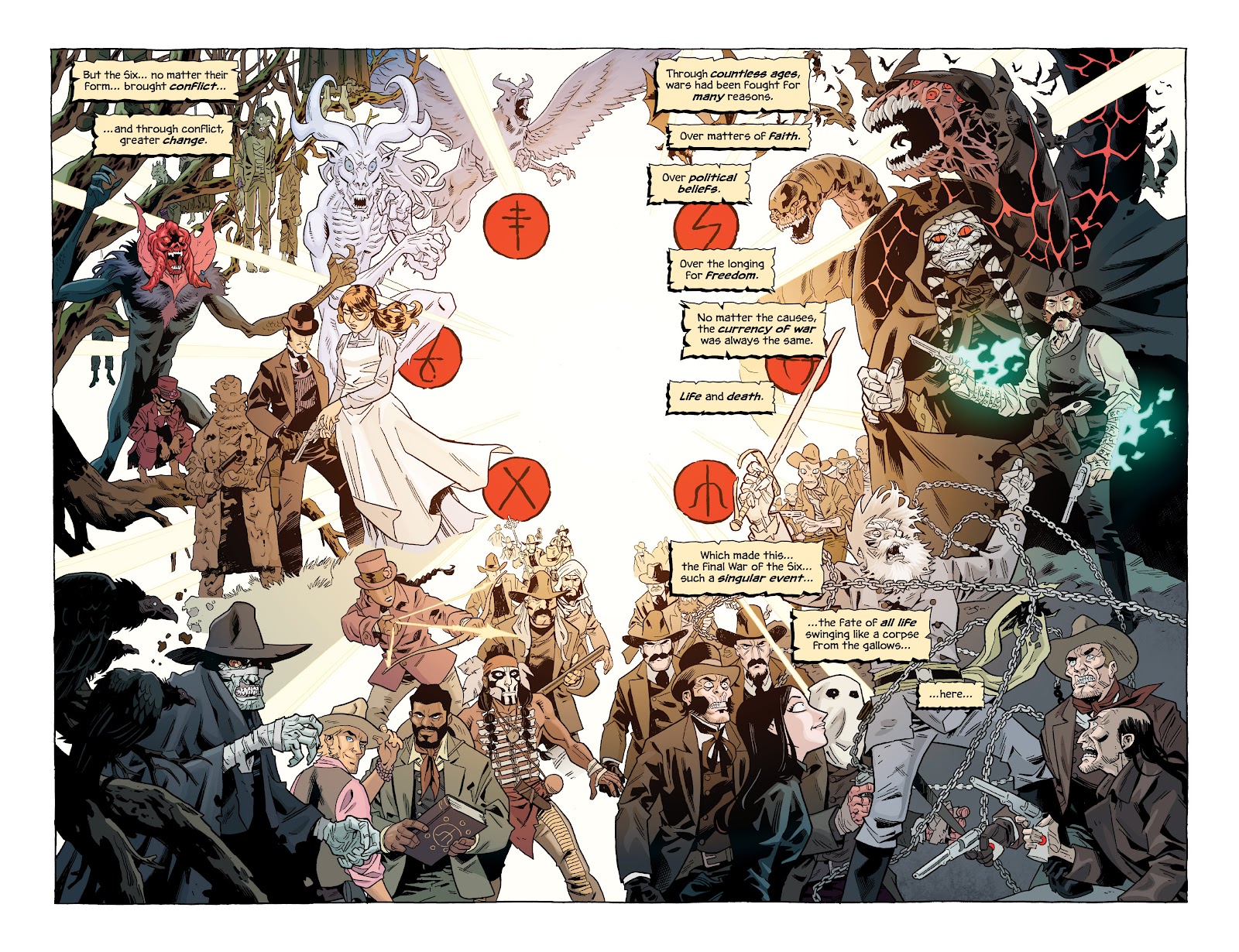
The world of The Sixth Gun revolves around six pistols (get it? revolve? they're revolvers), all of which are imbued with supernatural powers. The First Gun fires with the force of a cannon, the Second Gun spreads the flames of perdition, so on and so forth. The titular Sixth Gun grants the wielder visions of the past and future, and it falls into the hands of Becky Montcrief when her stepfather is killed. Drake Sinclair, who is far from a decent man, seeks the guns for financial gain. The two characters' fates are inextricably connected to each other and the Six. I was excited to read this series based on a summary much like what I've just written, and my attention was held even better than I expected. The comic immediately plunges the reader into quick-paced action with a fantastical twist. The plot is well crafted, weaving every story together. Nothing is dragged out or elaborated on too much, cleanly wrapping up at 50 issues. The art is bold and bright, painting the tale in full technicolor. So, if I have little criticism regarding the plot or art, that leaves the characters and the relationships between them, which is where the biggest weaknesses of this series lie, in my opinion. One of the lead characters, Drake Sinclair, is a gunslinger fighting his way towards the fortune he desires. It's quickly established that "while he had known one or two decent folks in his time, he didn't rightly count himself among their number." That phrasing stuck with me, not sure why. As you might guess, the term "anti-hero" describes him well enough. The other protagonist, Becky Montcrief, is initially the victim of a common failure—as the only woman in the main cast, she has very little agency and she often ends up in situations where a man needs to come to the rescue. Though she is eventually allowed to have a personality and make decisions within the story, it would have been nice if she'd seemed like a real character from the beginning. And when these two characters are paired together, something... somewhat less than magical happens. Fairly early on, they describe each other as "friends," yet there is absolutely no behavior anywhere that implies this. It's nice to see how the connection humanizes Drake, but it caught me off guard. The two rarely speak to each other outside of action scenes, so I was wondering "and is this "friendship" in the room with us right now...?" But hey, despite my complaints, Becky and Drake obviously make a really cool pair of protagonists. Slinging five of the six guns between them, every fight is explosive and fiery, and the thrills can't be dampened by an underdeveloped friendship. My overall enjoyment of the series was largely unaffected by it, I just like complaining. As I said before, it captured my attention with the exciting plot, blended genres, and colorful art. I think I would say it's really my type of thing!! I enjoyed it so much I've already picked up another (albeit shorter) series by Bunn and Hurtt, The Damned, and I plan to delve into Bunn's horror work. Review written July 2023. |
| Cullen Bunn and Brian Hurtt | ||
| 2010-2016 | ||
| ★★★☆☆ | Favorite Panel
|
 |
Pulp |
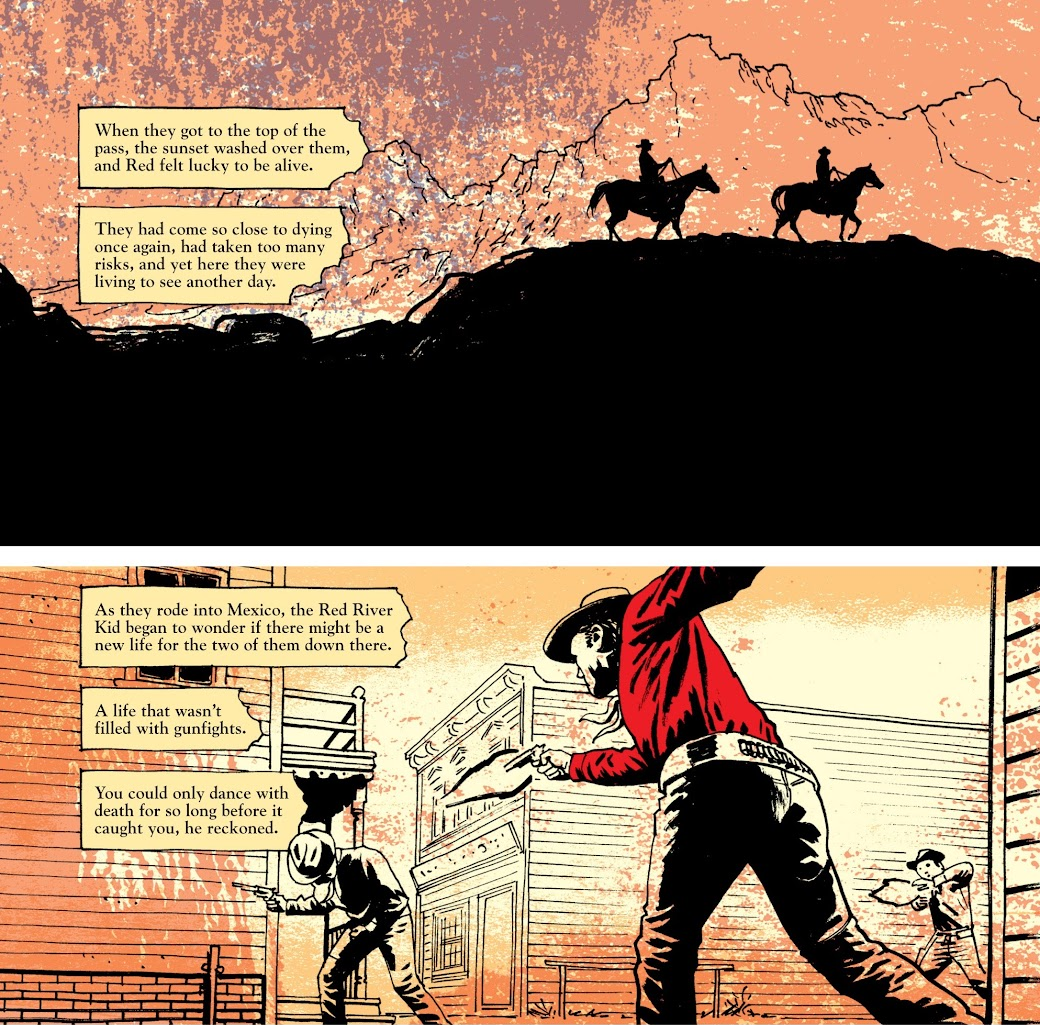
I hadn't read an American comic in years, but I've been back into Westerns lately so I wanted to give the comic medium a shot again. I Review Westerns has an article covering Western comics, and I used that to pick something short to test the waters: Pulp. The 75 pages of this graphic novel follow Max Winter, an aging outlaw-turned-pulp-writer-turned-outlaw-again, as he sets out to rob Nazis rallying in 1939 New York City. I LOVE "one last heist" type stories, so I couldn't pass it up.
The general plot is entertaining, if predictable; my main complaint overall is with the themes falling flat. Commentary regarding violent delights and violent ends is introduced at the conclusion, and Winter's reflections upon his life would have felt more meaningful to me had this discussion begun sooner. Other themes—antisemitism, corruption within the ruling class, growing old in a modern world, devaluing of the arts—are touched upon but receive little elaboration. I think, seeing as how it's such a short story, it might have benefited from paring down these themes and focusing on the concepts of violence that seemed like they were meant to be important. I don't really have much to say about the art. I was never confused about what was being depicted, which is very nice, but it didn't leave much of an impression. Essentially, while nothing about it surprised me or really stuck with me, I liked it well enough. I'm looking forward to reading other Western comics! Review written June 2023. |
| Ed Brubaker and Sean Phillips | ||
| 2020 | ||
| ★★☆☆☆ | Favorite Panels
|
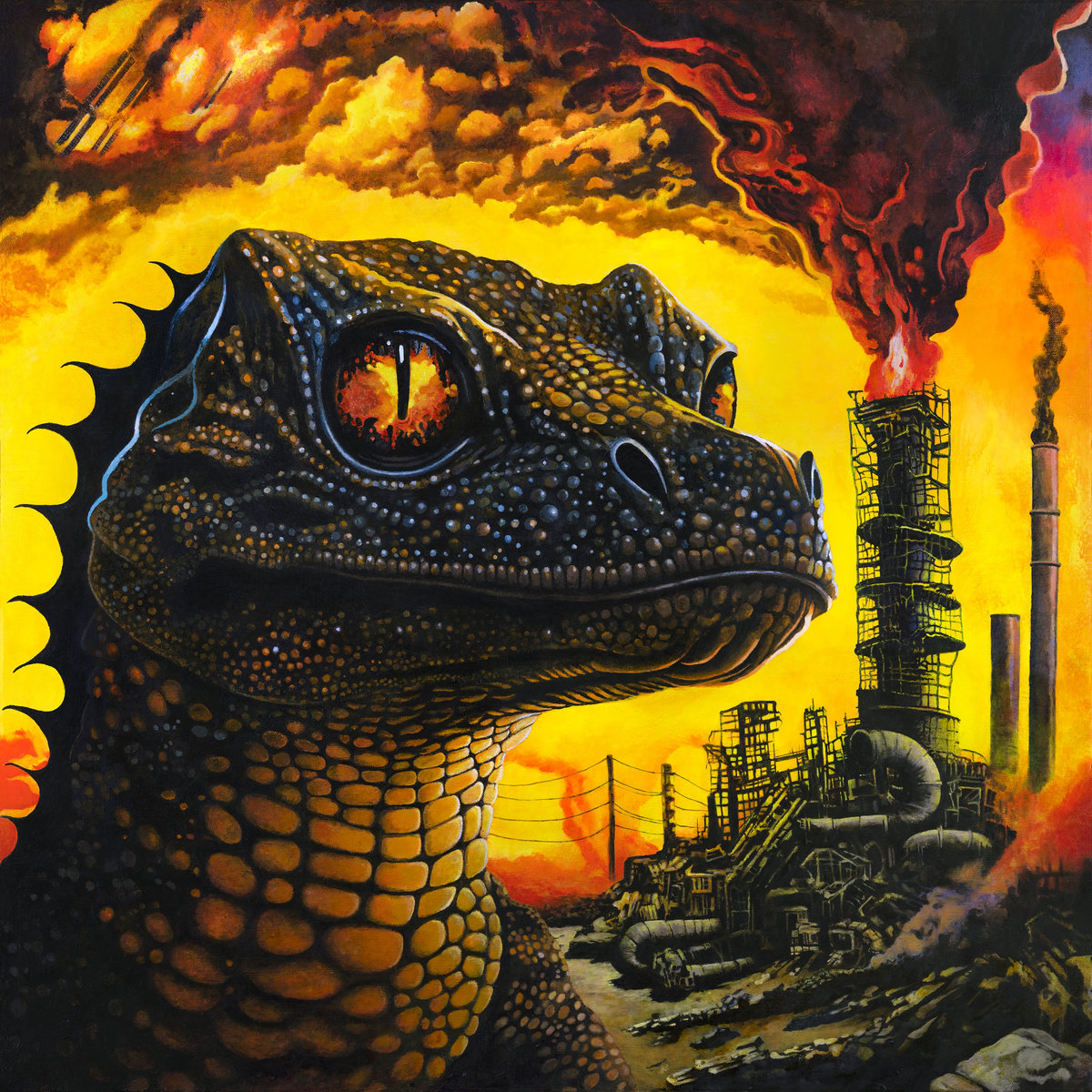 |
PetroDragonic Apocalypse; or, Dawn of Eternal Night: An Annihilation of Planet Earth and the Beginning of Merciless Damnation |
DRINK THE FUCKIN GAS AND KILLETH!!!!!!!
Review written June 2023. |
| King Gizzard & the Lizard Wizard | ||
| 2023 | ||
| ★★★★★ | Favorite track: "Converge" |
 |
Calm Ya Farm |
Their previous album, Rapscallion, didn't quite click with me, but Calm Ya Farm is definitely my type of thing. Lovely and charming, no notes.
Review written June 2023. |
| The Murlocs | ||
| 2023 | ||
| ★★★★☆ | Favorite track: "Superstitious Insights" |
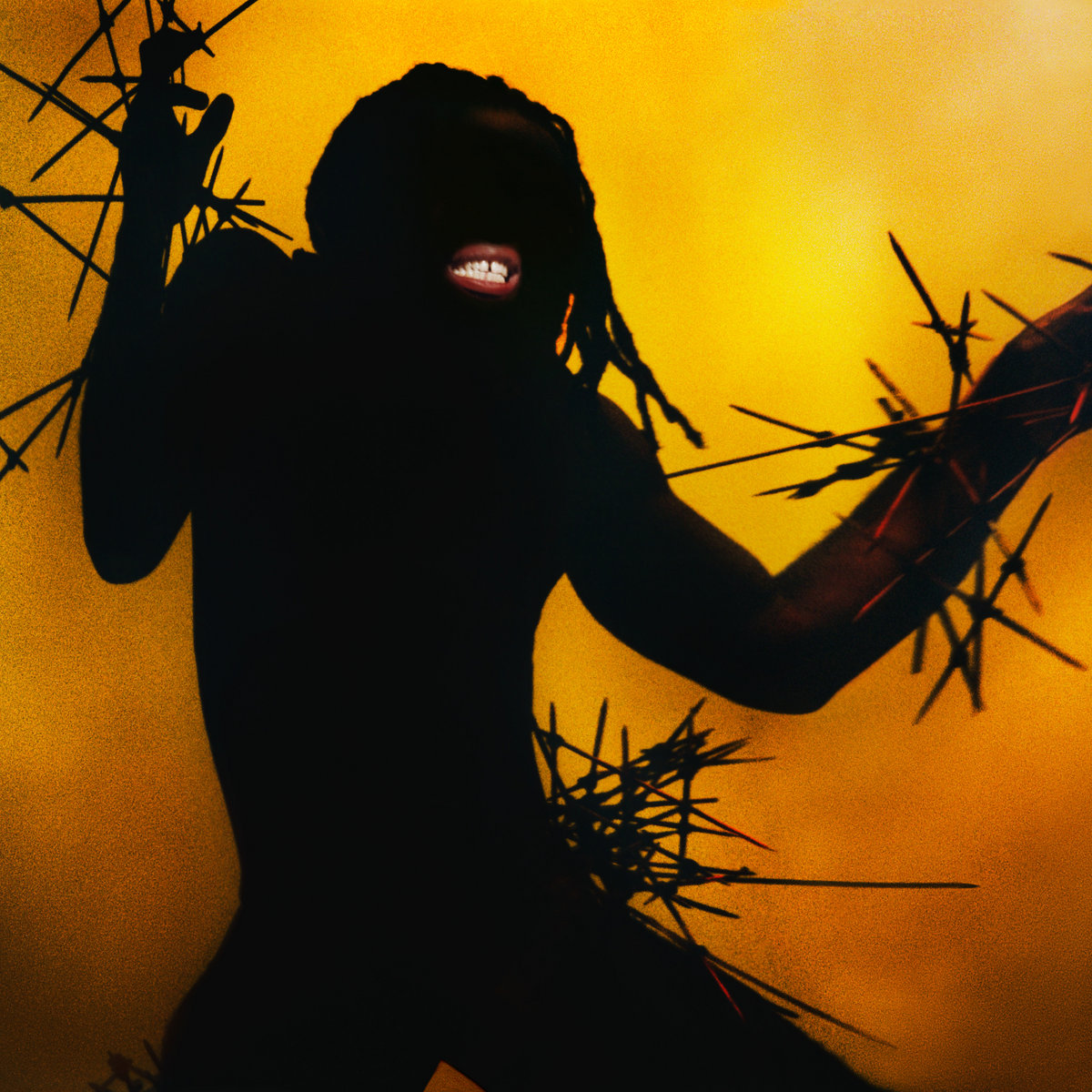 |
Heavy Heavy |
My only use for Spotify is to discover new music, and it really pulled through when it put Sink or Swim on a playlist for me. The moment the song was over, I wanted more, and Heavy Heavy did not disappoint. Listening to the full album left me floored; it's as if the MP3 files are bursting at the seams, exultant and enthralling. True to the album name, it reminds me of a heavy summer rainstorm that blows over in half an hour (33 minutes, to be exact). Probably the best album I've listened to this year, aside from those by my established favorite artists.
Review written June 2023. |
| Young Fathers | ||
| 2023 | ||
| ★★★☆☆ | Favorite track: "Sink or Swim" |
 |
Crown of Stars |
I unearthed this fragmented review from February 2023 and decided to put it here, despite its incompleteness, because I liked rereading some of the thoughts I had about this series. It's surprising that I wrote this much and still managed to leave out some pretty significant grievances. Unfortunately, I don't recall these criticisms well enough to touch on them now.
Spoilers are NOT hidden, this whole thing is spoilers. This is the first time I've ever so thoroughly enjoyed a book (series), I felt a need to write a review of it. Crown of Stars is frequently cited as one of the most popular fantasy series of the late 90s. The seven novels follow many characters in their adventures around a version of medieval Europe, set generations after an empire has fallen. Standard fantasy elements prevail: magic, violent warfare, earth-shaking catastrophes, fantastic creatures, and a bit of romance. Well, I’ll start with my favorite aspect of the series. Alain is one of the most tragic characters I've ever encountered. He loses everything, several times over. Every time he gains something worth having, it's taken from him. He finds a man who is overjoyed to call him “son,” a man he loses as a result of another’s pointless quest for revenge. He marries a woman he adores, one who won’t return an iota of his earnest affection due to her own contemptible nature, and both she and his inheritance are stolen from him. He dies, betrayed by the one who first offered him an escape from the simple life he led before. He falls so deeply in love, and she gives him a ring. A friend carves him a dog-headed staff. It’s all torn from him, everyone and everything. He finds the ring again thousands of years later, and you know what he does? He looks at the person who found the only link remaining between himself and the one he loved most, and he decides to let it stay with that person. He finds his staff again, and someone else needs it. He hands it over. “Let it be passed on to the one who needs it most,” he says. His selflessness is devastating. His suffering is heart-rending. If he had lost his devoted companions, the aptly named Rage and Sorrow, well… I admit I probably would have cried until I threw up. And yet somehow, even after everything, he still manages to love and love and love. And yet sadly sadly sadly enough, despite this unwavering kindness in him, he’s terribly isolated from other people. His closest bonds are with animals and non-human characters. Also, I should say he’s isolated from other average people. There’s a trend of him befriending disabled people that is… interesting, especially considering how each of these characters are also connected to animals. I don't believe the author was intentionally drawing a dehumanizing comparison, because Alain always treats them well even as others cast them aside. But the implication is still there maybe, even if it's superimposed by Alain simply relating to outcasts. Something to think about. Anyways. On the technical side of things, the books are written in smooth prose, very easy to read. Descriptions of scenery and setting are mostly a “get the gist” type of deal. The series falters in the second book—I found the switch from two protagonists to six (or seven?) so jarring I considered putting the series down. The original main characters had me hook line and sinker though so I stuck with it, and after the second book storylines tie together neatly. While it was rough at first, the timing of each perspective change was decent enough, objectively. In my entirely biased view, I would have enjoyed seeing more of Alain's story. As I made pretty clear, he was my favorite character, and while I appreciate the author’s style of not wasting anyone's time with lengthy travel descriptions, it would have been nice to follow him around a bit more. Even the smallest interactions he has with the inhabitants of the world around him show so much love and really set him apart from other characters, in this and in everything else. I just wanted to spend more time with him. That’s my main and very personal criticism, but I do have some other miscellaneous gripes. The conclusions to some of the main story threads are disappointing beyond belief. I really did not care at all for the motif of "you can't hate anything you aren’t also capable of loving." The epilogue of the very last book is unnecessary to the point of being insulting. Of course, these criticisms don’t devalue everything the series does well. I definitely see why it's considered an essential fantasy read, though I admit most of my enjoyment of this series stemmed from Alain’s character. Still, the themes he embodies are woven throughout the story, concepts of free will and “your life is what you make of it” and whatnot. It’s a powerful and hopeful tale, despite all the tragedy and strife. So, that’s what I had to say about Crown of Stars. You’ll notice I didn’t really discuss the main plot or Liath and Sanglant or the church or the fantasy aspects, and now, two years later, I couldn’t tell you jack about any of that. But I still know Alain. I remember his love, his kindness, his hope for the world around him. I think he’s one of my favorite book characters of all time. Review “written” Feb. 2023, Edited to be legible January 2025 |
| Kate Elliott | ||
| 1997-2006 | ||
| ★★★★☆ | Favorite Quotes
… though he wants to die because the pain is so bad, both the physical pain and the pain of anger and grief. Yet those same feet keep taking their stumbling, weak steps because he can’t even despair enough to fall down and die. He wonders if it is possible to love life too well. He, too, sheltered a blight on his soul. He, too, was penned in, waiting only to die. He was imprisoned and might bide on Earth for long years, if God were not merciful, long years remembering Adica’s sweetness and the light she brought with her, that was her essence. The smell of meadow flowers. They do not want to give me up. At Lavas he had been cast out; no one had wanted him, although he had been accepted by the Lions because of the king's imprimatur and, he hoped, his own hard work. Adica and her village had taken him in as one of their own, but he had been deposited there by a shaman of great power and terrible wisdom. Here at Hersford he had been accepted out of charity; he had believed himself suffered more than loved. |
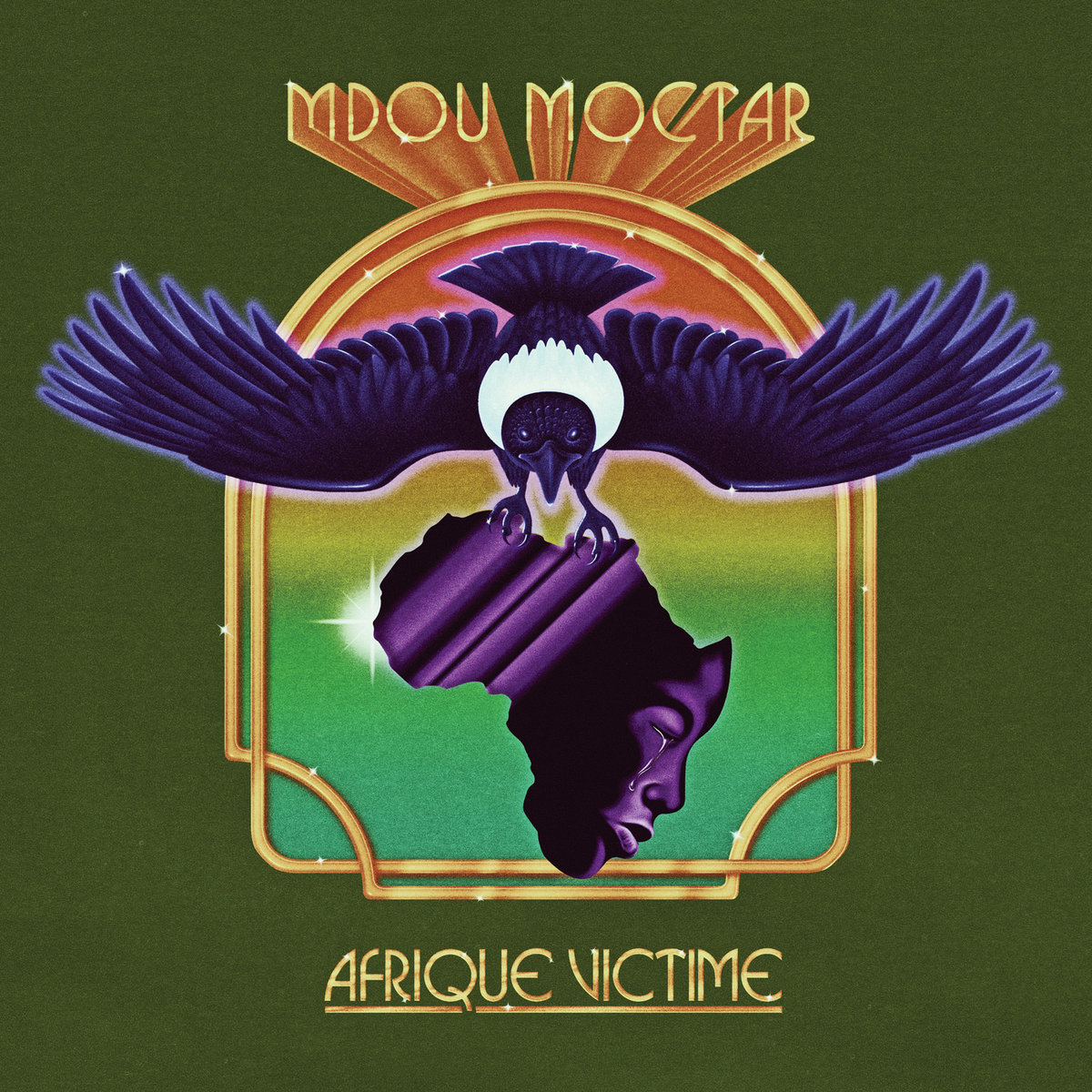 |
Afrique Victime |
I had listened to Chismiten from this album many times before I finally checked out Ilana, which led me back to Afrique Victime. Again, the guitar is incredible, but a notable difference is the vocals. As I mentioned in my review of Ilana, Mdou Moctar sings in Tamasheq, and though both albums are home to beautiful, swirling lyrics, the themes on this album really shone in comparison to those on Ilana. Reading the translations of Afrique Victime and Tala Tannam is uniquely crushing; I wish I could understand them in their original language. I suppose that's often the case with translated works. The title track alludes to political activism and crimes committed against African people, while Tala Tannam is a truly gorgeous love song. I can't recommend the latter enough!
Review written Feb. 2023, edited June 2023. |
| Mdou Moctar | ||
| 2021 | ||
| ★★☆☆☆ | Favorite track: "Tala Tannam" |
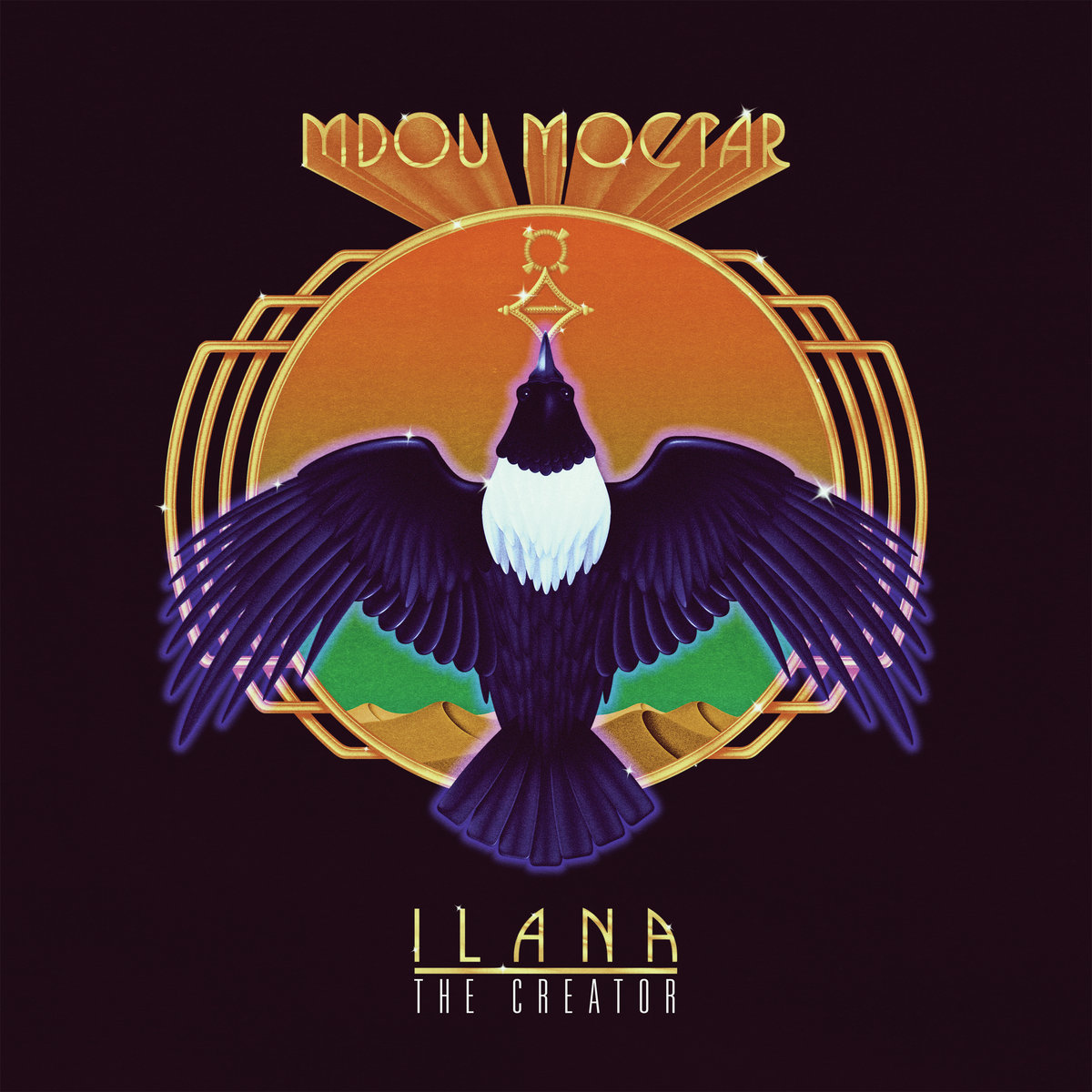 |
Ilana: The Creator |
Ilana: The Creator is technically described as psychedelic rock. Wikipedia articles throw around terms like desert rock and Hausa music, but those labels don't mean much to me. Even so, it doesn't take someone well-versed in Saharan music tell you Mdou Moctar's skill with the guitar is indescribable. It's out of this fucking world, kaleidoscopic and transcendental. Overlaying the guitar are absolutely brilliant vocals. The lyrics are in Tamasheq, and translation is unnecessary to know they're poetic beyond belief.
I first heard Chismiten off Afrique Victime years ago when it came out, and I kind of tucked away the idea of listening to more for a rainy day. (Ironically enough, it did rain today.) I'm glad I finally checked out a full album! Review written Feb. 2023. |
| Mdou Moctar | ||
| 2019 | ||
| ★★☆☆☆ | Favorite tracks: "Wiwasharnine," "Tumastin" |
 |
Weird Revolution | I really love a few Butthole Surfers songs, but I had never heard a full album of theirs until now. I've listened to Dracula From Houston about a thousand fucking times, so this one seemed like a good place to start. While none of the songs are quite as good as that one, the entire album held my attention, if just barely. It was enjoyable enough to listen to; I'm a fan of repetitive songs, and some of the tracks scratched that itch. The Last Astronaut and the reprise really got me at the end with the unique narrative. It makes me feel a little bit sick. It's great.
Review written Feb. 2023. |
| Butthole Surfers | ||
| 2001 | ||
| ★★☆☆☆ | Favorite track: "Dracula From Houston" |
 |
Dispepsi | Falling under a genre called "plunderphonics," this album is a collage of Pepsi advertisements. Repetitive original lyrics are interspersed with clips from Pepsi commercials, talk radio, and the news, forming a mosaic that criticizes consumerism and the pervasiveness of ads. It’s interesting to be listening to this in the age of the internet and considering how there was a time when people were only exposed to ads on the radio, on television, on billboards.
I think most of the songs are weak individually, but listening to the entire album is a neat experience. You might tune it out for a bit, but at some point a slur or something should draw your attention back again. Overall, it makes its point. It had me thinking about Pepsi more often than before I gave it a listen, that’s for sure. Review written Jan. 2023. |
| Negativland | ||
| 1997 | ||
| ★★☆☆☆ | Favorite track: "Aluminum or Glass: The Memo" |


 REVIEWS