Reviews written in 2024, in reverse chronological order.
 SUPERBUG
 |
Lucifer's Hammer |
Lucifer's Hammer. Ironically did not hit hard with me. The plot builds slowly around amateur astronomer Tim Hamner and the approaching comet he discovered. An extensive and diverse cast is introduced, with varying degrees of relation to Hamner or his comet. This was one of those times I was happy to be reading an ebook, because even with the dramatis personae as a guide I had to continually search for character names to keep them all straight.
The writing style felt very generic to me, which isn't necessarily a bad thing but didn't serve to pull me in the way I had hoped this book would. This, paired with the agonizing (necessary, but still agonizing) buildup to the actual comet event, left me pretty disinterested until nearly halfway through—at which point the comet hits, and of course things pick up dramatically. In fact, things progress too quickly. The story completely skips over travel, society-building, and conflicts that I look for in an apocalyptic novel. So I really don't have much commentary on the plot in this. As for main themes, I'm not quite sure what the reader is meant to take away. There are the expected threads of reliance on technology and restructuring of societal power and whatnot. Slightly more unique themes emerge, such as "cheating on your wife" and "dealing with cannibal priests," which really aren't all that entertaining. With so many various characters/entities to discuss, all with different motivations and desires and levels of relevance, it spreads itself too thin to make any points about anything (?). I think my favorite part of this story was the actual SHTF event. It takes you through vignettes of where random people were when it happened and how they died. It's a bit long, but I'll include the one that stuck with me here if you'd like to read it. It can kind of stand alone as a short story, which is neat.
The town of Akrotira lay in twilight. Incongruities: white mudwalled houses that might have been created ten thousand years ago; the Venetian fortress at the top of its hill; the modern school near the ancient Byzantine church; and below that, the camp where Willis and MacDonald were uncovering Atlantis. The site was almost invisible from the hilltop. In the west a star switched on and instantly off, blink. Then another. "It's started," MacDonald said.
Wheezing, Alexander Willis settled himself on the rock. He was mildly irritated. The hour's climb had left him breathless, though he was twenty-four years old and considered himself in good shape. But MacDonald had led him all the way and helped him over the top, and MacDonald, whose dark red hair had receded to expose most of his darkly tanned scalp, was not even breathing hard. MacDonald had earned his strength; archeologists work harder than ditchdiggers.
The two sat crosslegged, looking west, watching the meteors.
They were twenty-eight hundred feet above sea level on the highest point of the strange island of Thera. The granite knob had been called many things by a dozen civilizations, and it had endured much. Now it was known as Mount Prophet Elias.
Dusk faded on the waters of the bay far below. The bay was circular, surrounded by cliffs a thousand feet high, the caldera of a volcanic explosion that destroyed two thirds of the island, destroyed the Minoan Empire, created the legends of Atlantis. Now a new black island, evil in appearance and barren, rose in the center of the bay. The Greeks called it the New Burnt Land, and the islanders knew that some day it too would explode, as Thera had exploded so many times before.
Fiery streaks reflected in the bay. Something burned blue-white overhead. In the west the golden glow faded, not to black, but to a strange curdled green-and-orange glow, a back drop for the meteors. Once again Phaethon drove the chariot of the sun…
The meteors came every few seconds! Ice chips struck atmosphere and burned in a flash. Snowballs streaked down, burning greenish-white. Earth was deep in the coma of Hamner-Brown.
"Funny hobby, for us," said Willis.
"Sky watching? I've always loved the sky," MacDonald said. "You don't see me digging in New York, do you? The desert places, where the air's clear, where men have watched the stars for ten thousand years, that's where you find old civilizations. But I've never seen the sky like this."
"I wonder what it looked like after you-know-what."
MacDonald shrugged in the near-dark. "Plato didn't describe it. But the Hittites said a stone god rose from the sea to challenge the sky. Maybe they saw the cloud. Or there are things in the Bible, you could take them as eyewitness accounts, but from a long way away. You wouldn't have wanted to be near when Thera went off."
Willis didn't answer, and small wonder. A great greenish light drew fire across the sky, moving up, lasting for seconds before it burst and died. Willis found himself looking east. His lips pursed in a soundless Oh. Then, "Mac! Turn around!"
MacDonald turned.
The curdled sky was rising like a curtain; you could see beneath the edge. The edge was perfectly straight, a few degrees above the horizon. Above was the green-and-orange glow of the comet's coma. Below, blackness in which stars glowed.
"The Earth's shadow," MacDonald said. "A shadow cast through the coma. I wish my wife had lived to see this. Just another year…"
A great light glared behind them. Willis turned. It sank slowly—too bright to see, blinding, drowning the background—Willis stared into it. God, what was it? Sinking… faded.
"I hope you hid your eyes," MacDonald said.
Willis saw only agony. He blinked; it made no difference. He said, "I think I'm blind." He reached out, patted rock, seeking the reassurance of a human hand.
Softly MacDonald said, "I don't think it matters."
Rage flared and died. That quickly, Willis knew what he meant. MacDonald's hands took his wrists and moved them around a rock. "Hug that tight. I'll tell you what I see."
"Right."
MacDonald's speech seemed hurried. "When the light went out I opened my eyes. For a moment I think I saw something like a violet searchlight beam going up, then it was gone. But it came from behind the horizon. We'll have some time."
"Thera's a bad luck island," Willis said. He could see nothing, not even darkness.
"Did you ever wonder why they still build here? Some of the houses are hundreds of years old. Eruptions every few centuries. But they always come back. For that matter, whattre we doing—Alex, I can see the tidal wave. It gets taller every second. I don't know if it'll reach this high or not. Brace yourself for the air shock wave, though."
"Ground shock first. I guess this is the end of Greek civilization."
"I suppose so. And a new Atlantis legend, if anyone lives to tell it. The curtain's still rising. Streamlines from the nucleus in the west, Earth's black shadow in the east, meteors everywhere…" MacDonald's voice trailed off.
"What?"
"I closed my eyes. But it was northeast! and huge!"
"Greg, who named Mount Prophet Elias? It's too bloody appropriate."
The ground shock ripped through and beneath Thera, through the magma channel that the sea bed had covered thirty-five hundred years before. Willis felt the rock wrench at his arms. Then Thera exploded. A shock wave of live steam laced with lava tore him away and killed him instantly. Seconds later the tsunami rolled across the raw orange wound.
Nobody would live to tell of the second Thera explosion.
Anyways. Honestly, I wish I had something thoughtful to say about the novel as a whole, but it just didn't appeal to me the way I wanted it to and I don't have anything. Useless review. Review written November 2024, edited December 2024 |
| Larry Niven and Jerry Pournelle | ||
| 1977 | ||
| ★★☆☆☆ | Favorite Quotes
Not only do millions think the world's going to end, but millions more hope so. It shows in their attitudes. They hate what they're doing, and keep looking nostalgically at the "simple" life. Of course they won't voluntarily choose to be farmers or live in communes, but if everybody has to… |
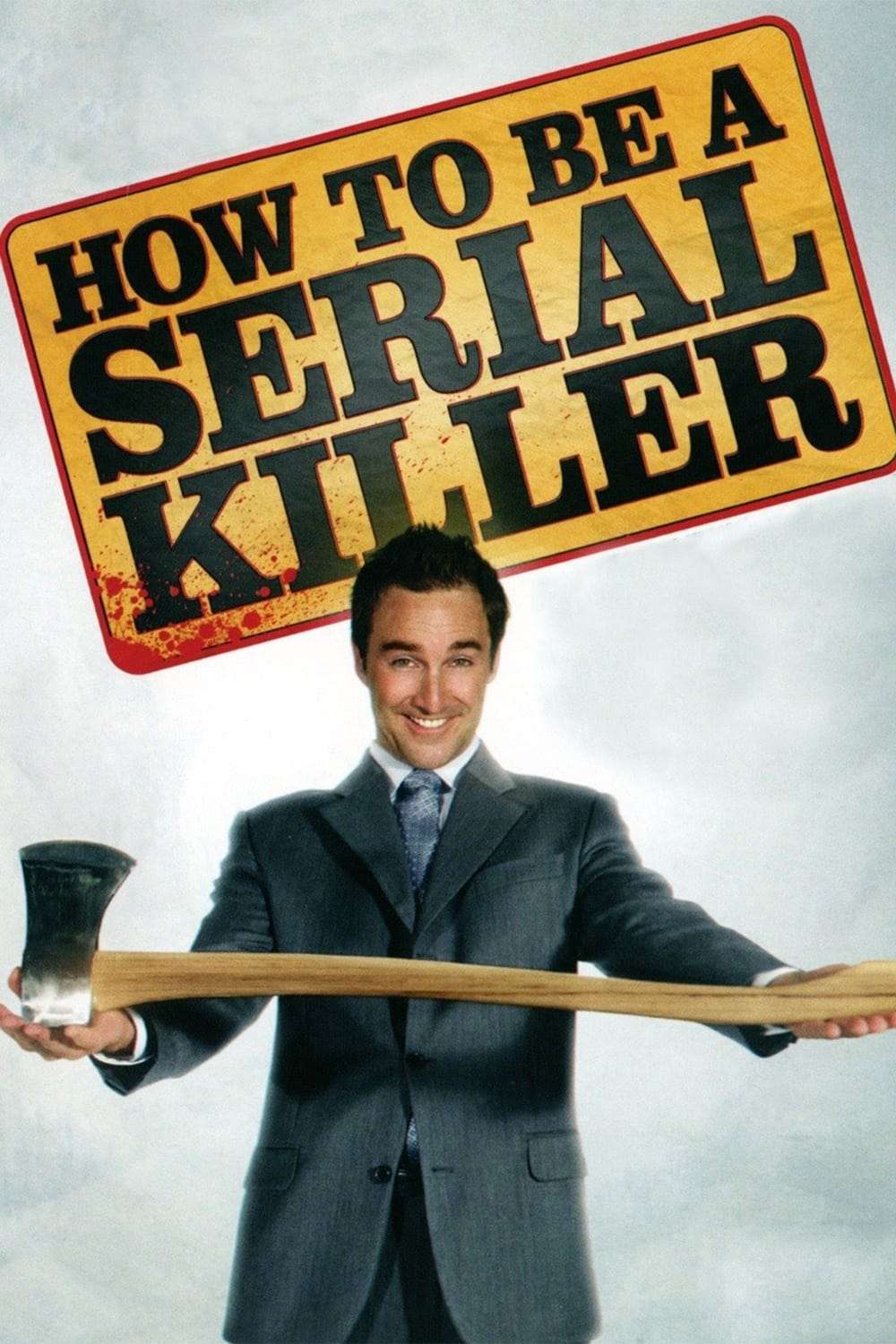 |
How to Be a Serial Killer |
One of my favorite movies I've seen this year. It's not exactly a cinematic masterpiece, but something about this comedy absolutely captivated me.
The film introduces serial killer Mike, who believes he's making the world a better place with his habit. He adheres to a strict moral code; kids are off limits, as are animals. He gives back to his community, he's a regular upstanding citizen! Of course, he needs someone to continue his legacy, so he picks up a loser video store employee to show him the ropes. This plot is interspersed with a TED-talk like sales pitch for Mike's lessons in serial killing, as well as short interviews with a serial killer expert and characters in the story. This structure had me GLUED to the screen. The performances are all entertaining, the interview segments are funny and feel very candid. But let's get this out of the way, I only watched this movie to see Dameon Clarke's acting. His voice acting is some of my favorite in the universe and I was NOT disappointed seeing him on the big screen. The way he acts, his charisma is just unparalleled, in my mind. It's hard to believe he's had so few roles, but I guess his skill is so suited to particular character types it might be for the best. I'm already SO excited to rewatch this one. I can't seem to find a decent copy of it online, so I'm looking into buying a dvd. Haven't had to do that in yeaaaaars. Anyways, I think I might make this MY movie, though I don't know if I even have it in me to be pretentious about a movie... Review written August 2024. |
| Luke Ricci | ||
| 2008 | ||
| ★★★★☆ | Favorite Quotes
Hey dipshit! Hey, y'know what's fuckin' hilarious? Is that you chose to act like a fuckin' asshole on your last day on earth! |
 |
Blindsight |
I was looking for quotes from science fiction novels for inspiration, and kept running into this title everywhere. That's enough of a recommendation for me, so I picked it up. I thought I had made a mistake for the first 80% of the novel, until shit got crazy at the very end. The story is told by Siri Keeton, a so-called "synthesist," or informational topologist. After Earth is surveyed by extraterrestrial probes in the late 21st century, he is chosen as part of a specialized crew that travels to the origin of an alien signal found in the solar system. His job is to document the mission—"Just observe. Don't interfere."
Siri and the other crew members have bodies and minds augmented with cybernetics. Isaac, the biologist, can hear x-rays and see in ultrasound. Susan, the linguist, is referred to as The Gang; she's fractured her mind to form Sascha, Michelle, and Cruncher, a group that switches seamlessly between personae. Amanda, the soldier, is, well, the soldier. The transhumanism of the characters is essential to the central theme of human consciousness, as you may have guessed based on the title, if you knew what the word "blindsight" meant before reading this. (I did not.) As the narrator, Siri's upgrades and relationship with consciousness are obviously the most intriguing. He suffered from epilepsy when he was a child, which was cured by removing half his brain. The severed lobe was eventually replaced with technological upgrades enabling him to map and interpret surfaces—in his case, human faces and body language. Despite this preternatural ability to interpret people, Siri struggles with loss of empathy and limited emotional range. He is ostracized due to his occupation, considered an intruder for spying on the subconscious of those around him. He displays some traits that are commonly associated with autism, though he is never described as such. Of course, his affliction is due to only having one flesh hemisphere of a brain, but I think the author borrowed from autistic stereotypes when developing him. Augments like his are only the tip of the iceberg in this future society, which is so advanced Siri mentions they may have already hit Singularity. For instance, people can choose to abandon their flesh, hook their brains to computers, and ascend to Heaven, a fabricated reality of their own design. Siri's mother left him and his father to join the ranks of these Virtually Omnipotent, and our narrator's visits with her are a poignant example of how the intersection between technology and consciousness affects interpersonal relationships. This theme is echoed in Siri's reflections upon a past girlfriend named Chelsea, who worked as a "neuroaestheticist," tweaking people's tastes in music or food so they can be more compatible with their partners. Even sex has become outdated, phased out by virtual reality sex. Chelsea, though, is an old-fashioned girl—she prefers what she calls "real" sex, which repulses Siri and stands as a point of contention between them. In addition to all these characters, the final crew member is "captain" Sarasti, token "vampire" aboard their vessel. I was wary of this label, as I feel that fantasy and scifi concepts are best enjoyed separately, for the most part. And honestly, I was right in this case. Vampires, a genetic deviation from mainstream Homo sapiens evolution, subsist on human flesh and are harmed by lines that intersect at right angles. They were extinct at some point, but one way or another they were resurrected so their superior intelligence could be put to use. It's not a catastrophic clashing of genres, but it's ineffective because the author forces the vampires to bridge a gap that was never really there. Sarasti is characterized as a genius sociopath beyond human comprehension, which doesn't quite add up considering the entire crew already perceives the world in ways beyond human comprehension. At the end of the novel,
The author presents the vampires' superior intelligence and coincident lack of consciousness as an advantage over human sentience. Comparing humans, vampires, and the aliens, he posits that sentience could be considered an evolutionary disservice, which is an intriguing point. However, it was completely unnecessary to include hyperintelligent cannibals when cognitive enhancement to the point of brain-computer interfacing is already essential to the plot. It would have been vastly more significant if the captain had been human, one whose mind was more circuitry than synapse, more wiring than neurons firing. So yeah, the vampire aspect of the novel fails ultimately because, sandwiched between superhumans and aliens, the vampires served as distraction from the central themes as opposed to enhancement. It looks like there's something of a sequel as well as a prequel, though I can't say I'm interested in them. I feel like this one is contained within itself and needs no elaboration. I felt no affinity towards the writing style, either, so I don't intend to pick up anything else by this author. Criticisms aside, I found the novel thought provoking. It was pretty cool to look at consciousness and intelligence and how those concepts may or may not apply to an alien life form, so I would say I enjoyed it! Review written March 2024. Reflecting upon the books I've read in 2024, this one has just stuck with me in a way few other books have recently. I've spent a surprising amount of time revisiting its themes of alienation and intelligence. Also, after reading a bit more about the author and checking out his blog I might actually have to look into more of his stuff. Pretty cool guy. Addendum written December 2024. Yeah, I guess this is one of my favorite books now. I think of it so fucking often. It pissed me off so much. Addendum 2 written March 2026. |
| Peter Watts | ||
| 2006 | ||
| ★★★☆☆ | ★★★★☆ | Favorite Quotes
That distance—that chronic sense of being an alien among your own kind—it's not entirely a bad thing. I really wanted to talk to her. |
 |
Close Encounters of the Third Kind |
I can't believe it's taken me so long to read and watch this one. I'm sure I would have done so at some point, eventually, but I lucked out and found the paperback at a thrift store, which I read in like a day. So, even though it's a classic with major cultural significance and I probably can't say anything that hasn't been said about it before, here's a quick summary of my thoughts.
The story focuses on Roy Neary, an everyday electrician whose close encounter leaves him desperate for answers. Jillian Guiler's little son is abducted around the same time, and their fates converge, meeting at coordinates they're inexplicably drawn to. It's written beautifully. It's straightforward almost to the point of being simple, and yet there's something so lovely and whimsical about it. The film, as is usually the case, lost some of the ambiance of the book and I think it was skewed with more horror elements than I was expecting, but it followed the book very closely, pulling many lines word for word from the novel. Obviously, it's an excellent adaptation. I admit, I actually cried while reading AND watching. It's not sad, but rapturous... something about it pulls you in and spins you out, from dread to elation and back again, and it's like seeing the sun come out from behind the clouds—and sing to you. I think my favorite aspect of it is how Roy's journey isn't some noble quest for knowledge, for advancement of the human race, it's this very personal desperation for answers. It's this frantic devotion that supercedes connection to his wife, his kids, his home, his job, his entire life. After all, he's been invited. Can you imagine being called in such a way... for them to come and sing to us, to invite us and touch us and take us away... to finally be found? Review written February 2024, edited March 2024. |
| Steven Spielberg (ghostwritten by Leslie Waller) | ||
| 1977 | ||
| ★★★★☆ | Favorite Quotes
He said the sun came out last night. He says it sang to him. "The sky," he said in a thin voice, "the sky sings to us." |
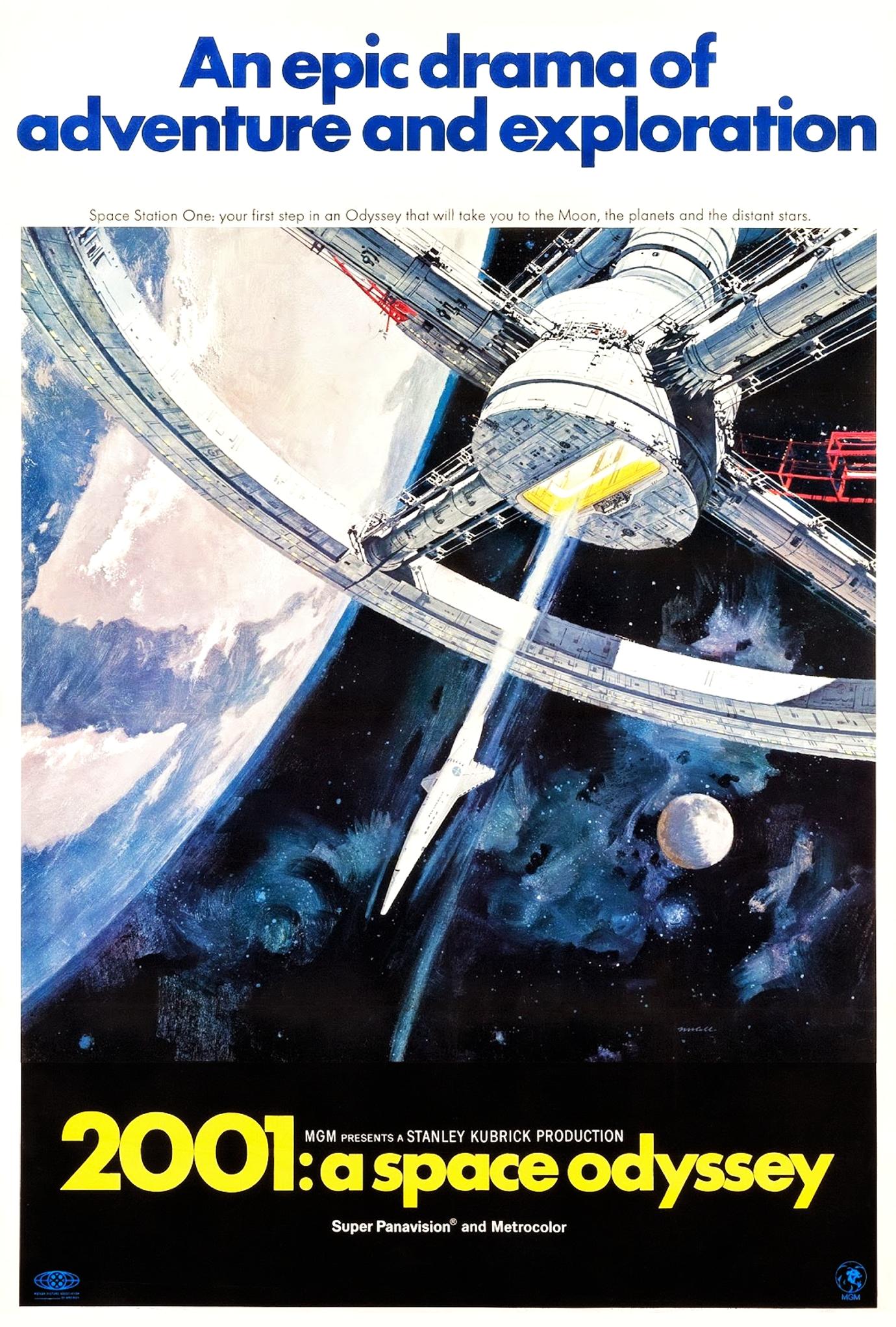 |
2001: A Space Odyssey |
The way people talk about this movie, I actually expected to enjoy it. I'm a huge fan of computers, especially those with personalities, so I had high hopes.
I held out this hope for a long time, until it entirely lost me something like 3/4 of the way in. Maybe I lack the creative vision necessary to extrapolate anything from this movie, but I came away from it with the impression that it was trying to be artistic and esoteric to distract from a lack of actual meaning. I couldn't tell you how intentional this prioritization was on the director's part. I guess you don't have to understand things to appreciate them and even enjoy them, but for the most part, this film left me too puzzled to like it at all. Aspects of Hal's story were very good, there was something sweet and sad about him I liked. But overall, I thought this film was pretty stupid. The only thing I gained from this was the ability to recognize references to it in other media, which is worth something! Review written January 2024. |
| Stanley Kubrick | ||
| 1968 | ||
| ★☆☆☆☆ |
 |
Skinny Dip |
I adored Carl Hiaasen’s books as a kid. They're all about some clever middle schooler who saves an endangered species or whatever, and as a budding environmentalist, I ate that up. So, after running into his name on a list of recommendations somewhere, I was thrilled to find out he writes adult fiction.
I had just finished reading some pretty rough shit—admittedly, I was excited to read something that posed minimal challenge. So excited, in fact, I tore through this in like two days. It's not a particularly long book, but considering how little time I have for reading these days I think those two days are a testament to how compelling the story is. In it, Joey Perrone and her husband Chaz celebrate their second anniversary on a luxury cruise, but the festivities are cut short when he flips her over the railing. Joey, presumed dead, actually survives the fall thanks to her swimming skills and a lucky run-in with a hot older man who lives alone in a big house on a small island... with his help, Joey seeks revenge on her murderous husband, discovering the corrupt companies and pollution plots that led to her marriage's ruination. If you're like me and you have fond memories of the author's books for a younger audience, you'll recognize extremely familiar themes in this book. I guess Hiaasen’s deep ties to the Everglades permeate his work. Which is awesome, because I work in a water resources field and half of the shit I do revolves around agricultural pollution and wetlands, so I really enjoyed having that familiarity with some of the subjects. Between that personal connection to the content, the vibrant protagonists and fascinating side characters, and the comedy that really defines the author's style, I found this book fantastic. I absolutely plan to read more; I hope his other adult works are as fun and humorous and sexy as this one! Review written January 2024, edited February 2024. |
| Carl Hiaasen | ||
| 2004 | ||
| ★★★★☆ | Favorite Quotes
One spring evening in 1896, a prominent Pennsylvanian named Hamilton Disston blew his brains out in a bathtub. He had become gravely depressed after depleting his inheritance on a grandiose campaign to drain 4 million acres of Florida swamp known as the Everglades. Although Disston died believing himself a failure, he was later proven a pioneer and an inspiration. [...] Inevitably the Everglades and all its resplendent wildlife began to die, but nobody with the power to prevent it considered trying. It was, after all, just a huge damn swamp. |
 |
The Hell Bent Kid |
The Hell Bent Kid is supposedly one of the most popular Westerns of all time. This short novel is told through the medium of Tot Lohman's journal, which is not always apparent in the writing style, though it does make for a uniquely conveyed story, especially at the conclusion.
Lohman details the series of events after he accidentally kills a man in self defense. He is hunted across Texas by the man's extensive family, and seeks his father in New Mexico. His brother's sawed-off rifle is his only constant companion, and he wields it with extraordinary skill as he finds himself killing again and again—always in self defense. There's not much to say about this one. I found this a very straightforward and simple and sad tale, and I guess I'm a bit of a sucker for the archetype Lohman embodies, so I enjoyed it. Review written January 2024, edited February 2024. |
| Charles O. Locke | ||
| 1957 | ||
| ★★☆☆☆ | Favorite Quotes
It lifted him off his feet and the sun did a curious thing. It seemed to hit him square and bright, as it had been hitting the boulder, so that his dark shirt for the minute seemed snow white... |
 |
All the Pretty Horses |
In All The Pretty Horses, John Grady Cole leaves his family’s ranch and sets off for Mexico with his friend Rawlins. After picking up another runaway as they cross the border, the three boys embark on a journey of spectacular futility. They bear witness to and participate in love and romance, killing and death, but every event seems muted, in something like a literary equivalent of the sepia filter used in movies to indicate a scene takes place in Mexico.
The first McCarthy novel I read, No Country for Old Men, while not exactly an easy read for me, had a natural sort of flow that drew me along. Maybe it was the writing style or the pacing or the strange subdued tone, but I took five months to labor through All The Pretty Horses. I could only read a page or two at a time before I felt the need to put the book down. This is nothing to be ashamed of, but making it to the end of the book and finding Reader's Guide questions like in books for middle schoolers was somewhat humbling. (Honestly, I think if I had been assigned this book in school I would have lost all my passion for reading.) Some of the questions were straightforward, asking "Do the characters think violence is bad?" and "How do character deaths propel the story?" while others actually enabled me to process the book and its meaning to some extent. For example, question ten: All the Pretty Horses is spare in exposition (note the economy with which McCarthy establishes John Grady’s situation at the book’s beginning) yet lavish in the attention it devotes to scenes and details whose significance is not immediately clear (note the description of the cantina on page 49 and the scene in which John Grady and Rawlins buy new clothes on pages 117-121). Why do you think the author has chosen to weight his narrative in this way? The question posed here made me realize the jarring pacing and inconsistent emphasis was intended to serve a purpose other than irritating the reader. No, but actually, the questions, which covered other technical aspects of the writing as well as themes of violence, cultural differences, and horses, made me realize that I could have appreciated the book much more if it weren't so difficult for me to get through it. I think was aware of this to some extent as I was trudging through, because I did feel that All the Pretty Horses was something I wanted to read. A vague connection with the themes is possibly the only reason I survived to the end. Did I enjoy it? No. Was it worth my time? I don't know. Am I glad I read it? Almost. So, once again, I find myself writing a completely meaningless "review" of a McCarthy novel. This time, though, I do have one conclusive thought: I don't intend to grapple with any other McCarthy books—not even the next two novels in this trilogy—for a long, long time. If ever. Review written January 2024, edited February 2024. |
| Cormac McCarthy | ||
| 1992 | ||
| ★☆☆☆☆ | Favorite Quotes
Él va a ver a su novia, he said. |


 REVIEWS